
About the writer
Amanullah Khan writes to untangle the questions beneath a subject.
This is my personal notebook and primary publishing home. I write independently, follow each idea where the research leads, and say plainly where something remains uncertain.
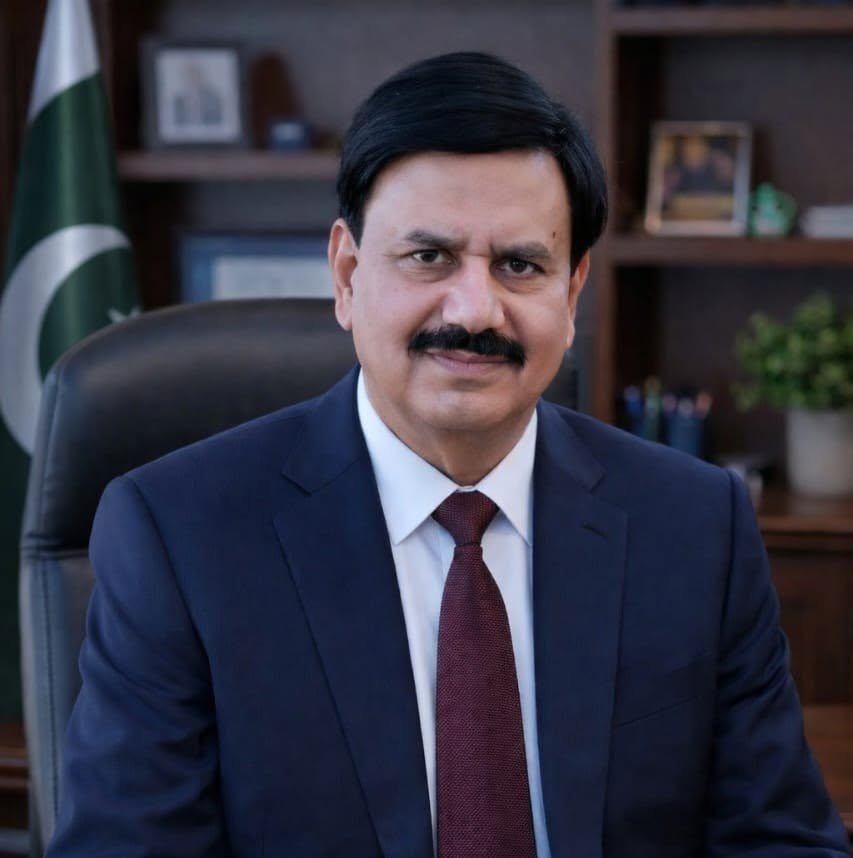
Background
Mr. Aman Ullah Khan is a retired senior civil servant belonging to the Provincial Management Service (PMS) of Punjab, Pakistan. With an illustrious career spanning several decades in public administration, governance, education and social development, he brings to his work a rich blend of professional experience, intellectual curiosity and a deep understanding of society and human affairs.
He holds a Master’s degree in Education, with specialization in Guidance and Counselling, from the Institute of Education and Research (IER), University of the Punjab, Lahore, an institution established in collaboration with Indiana University, USA. He subsequently earned his Law degree from Islamia Law College, Karachi. He also served in the Education Branch of the Pakistan Navy, reflecting his early association with education, discipline and institutional service.
He embarked upon his career in the Civil Services of the Government of Punjab as an Executive Magistrate (EAC) and subsequently held a wide range of important administrative, judicial and managerial assignments in different parts of the province. His distinguished service record includes positions as Executive Magistrate, Judicial Magistrate, Deputy Registrar Cooperatives, Assistant Commissioner/Sub-Divisional Magistrate, Additional Director Anti-Corruption, District Coordination Officer (DCO), Project Director of the Chief Minister’s Initiative for Primary Health Care (CMIPHC), and Managing Director of the Punjab Health Foundation. He also served the Punjab Rural Support Programme (PRSP) as District Support Manager in connection with the CMIPHC project. His career culminated in his retirement at the prestigious rank of Secretary to the Government of Punjab.
Following his retirement from government service, he continued his commitment to public welfare and institutional development by joining the Punjab Rural Support Programme, an esteemed development organization, as General Manager Operations, a position he continues to hold. His post-retirement engagement reflects his enduring dedication to public service and his belief that meaningful contribution to society transcends the boundaries of formal employment.
His following five books have come in the hands of readers
- Global Echoes —.عالمی واقعات کی گونج
- آئینۂ خیال و عکسِ زمانہ
- اوراقِ ماضی — نصف صدی پر محیط فکر و قلم کا آئینہ
- اخباری تراشوں نے کھولے ماضی کے بند دریچے
- عالمی تناظر، قومی حقائق
GLOBAL ECHOES reflects another dimension of his intellectual and literary pursuits. His interest in history, significant world events, international awareness initiatives and their relevance to Pakistan has inspired him to explore the connections between the past, the present and the challenges of the future. Through his writings, he seeks to promote awareness, encourage informed reflection and highlight the lessons that history and contemporary developments offer to individuals and society.
His professional journey, enriched by diverse experiences in administration, law, education and development, has shaped a perspective that values knowledge, integrity, public responsibility and continuous learning. He believes that the written word is not merely a means of communication; it is also a powerful instrument for preserving ideas, sharing knowledge and inspiring positive change.
Editorial process
Three stages behind every essay
01 Inquiry
I begin with a question worth holding. I write down what I think I already know, then mark where that knowledge is thinnest.
02 Research
I read primary material and outside perspectives, following the details that complicate my first view rather than confirm it.
03 Refinement
I cut until the argument is clear, check every claim against my notes, and say plainly where uncertainty remains.